Thursday, 7 January 2010

The Religion of Money

Modern society is based on the idea of economic growth, a continually expanding cycle of expectation (which supplies the motivation to drive the economy forward), trade leading to income, income leading to consumption and investment. This expansion is made possible by improvements in technology making possible cheaper production (machines replacing slaves and eventually workers) and virtually unlimited natural resources (because natural energies are released by advancing technology). But can growth continue forever? The answer will help to determine our response to the present global economic crisis.

The assumption that growth can be unlimited has been criticized in books such as Richard Douthwaite’s The Growth Illusion, summarized online here. He thinks that our society is wearing “a pair of spectacles which give short term economic issues such prominence that they obscure our vision of the future”. Douthwaite see money as the root of the problem, for “under our current debt-based monetary system, no country has the option of foregoing growth because, without growth, it will fall into serious economic decline.” Another critic of growth is Philip Goodchild, of the University of Nottingham. In a 2009 summary of his book The Theology of Money, Goodchild sees
“2008 as the first shock in the terminal collision between economy and ecology, with a major depression to follow in the coming decade due to an ongoing crisis in energy supply. The hope upon which the modern world is based will soon collapse, and competition for increasingly scarce resources will significantly undermine the moral and political cooperation to which we currently aspire.”

Saturday, 2 January 2010

The Right to Land

The "market" is not absolute but always conditioned by culture, philosophy, history and law. We can see this merely by considering what counts as a commodity. Human beings were once considered as such, but slavery has been abolished by law. Should there be a trade in body parts, in relics of the saints, in drinking water or air? Should we be allowed to "patent" a genetic code? The decision is up to us. If I can put something in a bottle or box and someone else is prepared to pay for it, it enters the market. I was reminded recently by an article in Prospect magazine ("A Place of One's Own" by Andrew Linklater) that land ownership rights only began to be recognized under the common law in the 12th century. For most peoples throughout history, while "animals and crops could be owned, occupancy might be bought and sold, but the Earth, the source of life itself, belonged to no one." (In 1800, Linklater estimates, two thirds of the world's agricultural land was still owned communally.) But in the modern era that distinction was lost.

Of course, the right to use land easily turns into a claim on the land itself - leasehold turning by degrees into freehold. In ancient times the King (or in the case of Israel, God) granted use of the land to his tenants, or in the case of "common land" rights of use may have predated even the monarchy, but with the Enclosure movement most of England became parcelled up into private plots. When in the 16th century money began to be lent against the value of a chunk of land, the concept of "equity" was invented (as the residual value after the payment of the debt) and equity became the basis for capital - but I suppose the key development was the assigning of a quantitative "value" to the land in the first place. The injustices to which the accumulation of landholdings around the world gave rise, once the principle of a "social mortgage" on private property was forgotten, are condemned in a powerful and informative document from the Pontifical Council for Justice and Peace called "Towards a Better Distribution of Land" (1997).

The global boom a few years ago, Linklater argues, was built on the disparity between the way land was owned in the West and in China. In the West, Clinton and Bush lifted financial regulations on home loans to spread homeownership to the poor, assuming the endless rise in the value of those homes would enable them to pay off their mortgages eventually. This rising value powered the expansion of the consumer economies - people (thought they) had more to spend. GDP expanded enormously. In China meanwhile, lack of property rights drove the peasants into urban factories, producing goods for Western markets - and savings too had to be invested abroad because of the lack of property at home. This created the whole unstable edifice of global finance ("around $2 trillion in Chinese savings invested in US treasury bonds, which in turn kept interest rates low, mortgage lending high, and economies growing", with derivative securities growing to more than $600 trillion by 2007). The rug was pulled from under this by the inevitable collapse of the property market in the US. Linklater concludes that a "future government would be wise to find ways to support property owners against their mortgage-lenders, and favour both ahead of the financiers who lent to them in the first place."

[Picture: Port Meadow Oxford, by Rose-Marie Caldecott]

Tuesday, 15 December 2009

On Surviving and Flourishing

Pope Benedict's 2010 Message for the World Day of Peace is entitled, "If You Want to Cultivate Peace, Protect Creation".

No comments here on the outcome of the Copenhagen Summit (!). However, on another matter, a fascinating article by Craig McLean on the success of Lego, the family-owned toy firm based near Copenhagen, recently appeared under the title 'Play it again'. We sometimes forget that family-owned businesses can get this big - and that big can be beautiful. A lot of lessons can be learned from this story about the creativity and innovation needed to keep a company alive.

The article doesn't talk much about the company ethos, but according to Arie de Geus, author of The Living Company, the only corporations that survive and flourish over a long period of time are those which treat their enterprises as "living work communities" - i.e. humanistically rather than as purely economic machines, valuing human talent above money and capital.

Analogously, perhaps, the Pope writes:
The ecological crisis offers an historic opportunity to develop a common plan of action aimed at orienting the model of global development towards greater respect for creation and for an integral human development inspired by the values proper to charity in truth. I would advocate the adoption of a model of development based on the centrality of the human person, on the promotion and sharing of the common good, on responsibility, on a realization of our need for a changed life-style, and on prudence, the virtue which tells us what needs to be done today in view of what might happen tomorrow.
The term "ecology" is quite recent, and is used to refer to a scientific approach that studies the living systems of the planet as an integral whole, interconnected with each other, rather than individual species in isolation. Humanity is taken into account as one more animal species that depends on, but also transforms, the environment around it, but as the Pope points out, human beings are in a special category. Like it or not, we play a central role. What we need is a humanistic ecological vision that "takes in not only the environment but also life, sexuality, marriage, the family, social relations"; that is, our "duties towards the human person" (CV, 51).

[Picture: Wikimedia commons]

Friday, 11 December 2009

George Soros

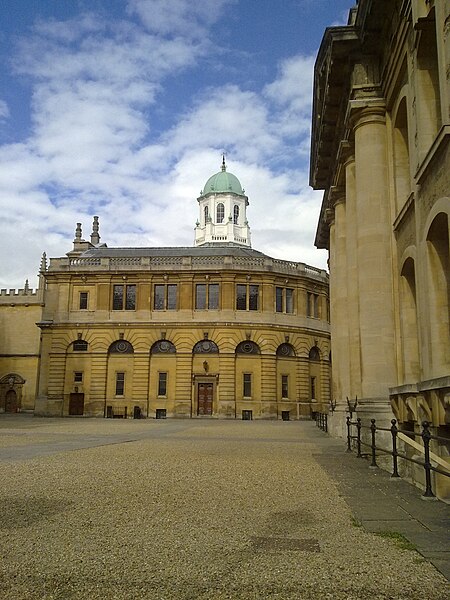
The financial speculator and philanthropist George Soros recently gave a lecture at a panel discussion in Oxford's Sheldonian Theatre, sponsored by the 21st Century School. In it he developed his theory of reflexivity and financial markets. He also announced the creation of an Institute for New Economic Thinking to be launched in April in Cambridge, through the Central European University. Interestingly, the distinguished panelists made several key points: that one's model of the human person determines one's economic model; that the economic order cannot be separated from the religious, political, social, and cultural orders; that there is a need for a new integration of the different academic disciplines in order to study big events (such as the recent recession); and that we have by and large lost the ability to educate students in such a way that they are capable of seeing the big picture, thanks to the fragmentation of our educational system (for more on that theme see my Beauty-in-education blog).

The point of the lecture in Oxford was to see what lessons could be drawn from the recent global financial crisis. For Soros, the lessons were stark. International, deregulated capitalism is over. It does not work. When governments were forced to put the market on to artificial life support, it became clear that markets by themselves do not tend towards equilibrium. The alternative, he concluded, is state capitalism of the kind we see in China (and much less successfully in Russia, he added), where the market is explicitly regulated by the state.

Many will react to this suggestion with scepticism, if not horror. Whatever happened to the Open Society? Personally, I wonder if Mr Soros in his preference for bipolar thinking has jumped too quickly to contrast the unregulated with the state-controlled market, ignoring the actual and potential role of civil society, in the space between the individual and the state. When the dinosaurs collapsed many millions of years ago, tiny little mammals running around their feet inherited the earth. Maybe the alternative to big state-run markets is a multiplicity of overlapping tiny markets, supported by credit unions, cooperatives, guilds and local currencies. That may be a dream, the dream of a small mammal in a world of big beasts, but as for putting our fate in the hands of the state, Leopold Kohr warned us against it long ago:
The fourth and last form of Radicalism is therefore no longer directed against capitalist exploitation, political privilege or religious superstition. Socialists, Liberals, and Christians have taken care of these. It is directed against the power of the state, symbolised by the swollen sponge of Parkinsonian bureaucracy. Since this is proportionate to the size of society on which it feeds, it follows that the most modern form of radicalism, having again to step outside the existing order to accomplish its ends, must aim at centering social life in national communities whose size is so reduced as to render excessive governmental power both impossible and unnecessary. For what good is the welfare state if its costs of administration become larger than the benefits it yields? The new radicals are therefore the decentralisers, the federalisers, the regionalists, the regional nationalists (in contrast to the centralizing, expansionist and hence non-radical nationalistic power megalomaniacs) such as they begin to emerge in all corners of the world.
Image: Sheldonian from Catte Street (Wikipedia Commons)

Saturday, 5 December 2009

Appropriate Technology

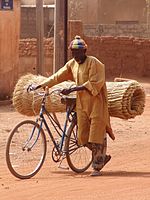
The phrase "appropriate technology" is sometimes associated with E.F. Schumacher, author of Small is Beautiful, though his term was "intermediate technology". The impetus for the idea seems to have come from Gandhi's advocacy of sewing machines, spinning wheels and bicycles - relatively simple technologies that nevertheless can make a huge difference to productivity at the local level, empowering the poor, and requiring fewer resources to produce and maintain. Recently there has been a lot of talk about "sand dams", as one example. The decentralised storage of water is an important strategy in semi-arid and arid regions outside the reach of perennial rivers, springs, deep groundwater or other water sources. Building small concrete dams backfilled with sand in seasonal rivers is an ancient method of storing water that is now being used extensively in Kenya and elsewhere to support local farming communities. As water becomes an increasingly scarce resource in many parts of the world, this relatively cheap solution is becoming more important.

The Pope writes about this in Caritas in Veritate (n.27):
Hunger is not so much dependent on lack of material things as on shortage of social resources, the most important of which are institutional. What is missing, in other words, is a network of economic institutions capable of guaranteeing regular access to sufficient food and water for nutritional needs, and also capable of addressing the primary needs and necessities ensuing from genuine food crises, whether due to natural causes or political irresponsibility, nationally and internationally. The problem of food insecurity needs to be addressed within a long-term perspective, eliminating the structural causes that give rise to it and promoting the agricultural development of poorer countries. This can be done by investing in rural infrastructures, irrigation systems, transport, organization of markets, and in the development and dissemination of agricultural technology that can make the best use of the human, natural and socio-economic resources that are more readily available at the local level, while guaranteeing their sustainability over the long term as well. All this needs to be accomplished with the involvement of local communities in choices and decisions that affect the use of agricultural land. In this perspective, it could be useful to consider the new possibilities that are opening up through proper use of traditional as well as innovative farming techniques, always assuming that these have been judged, after sufficient testing, to be appropriate, respectful of the environment and attentive to the needs of the most deprived peoples.
Readers may be interested in a rural education project in Sierra Leone, started by a former student of Plater College, John Kanu, under the name Sierra Leone Chesterton Centre.