Sunday, 8 November 2009
Community-owned shops
The encyclical letter, Caritas in Veritate, encouraged cooperatives and other applications of solidarity within the economy (e.g. section 66). In Britain, the recession seems to have led to just such a development. The Plunkett Foundation, a charity which promotes self-help in rural communities, reports that 2009 saw an unprecedented number of community-run ventures being set up. So far this year, 25 shops have opened and there are a further 65 in the pipeline, which would take the total number to at least 285, stretching from Cornwall to the Isle of Skye. "We think we've reached a tipping point where we have now gone from a few communities doing something that others saw as unusual to a situation where people are now thinking they could do it too. It is seen as a credible, viable option. It is incredibly rare for the shops to fail, closure rates are virtually zero." While the catalyst for action is often the impending closure of a shop, villages which have not had one for more than 20 years are also joining in the burgeoning movement.
Read the article by Ian Johnston.


The Plural Society
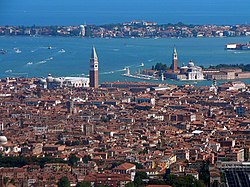
The Catholic Patriarch of Venice, Angelo Scola, is a man of enormous energy and vision. His intense interest in education and the Church’s engagement with the modern world have given rise to a number of important initiatives over the last five years, not least the journal Oasis, published twice yearly in several languages including English and Arabic and aimed primarily at Christians in Islamic countries. Oasis is a lavish production, as yet without a distributor in the UK, containing articles and book reviews as well as important extracts from classic works by the likes of Guardini and Ratzinger. The intention behind Oasis is to foster improved understanding between Christians and Muslims.
A extension of this initiative was launched in September under the name ASSET (for “Advanced Studies Society Economy Theology”). ASSET is a research centre devoted to the interdisciplinary and international study of “the plural society” – by which is meant the postmodern collision or, better, hybridization, of multiple cultural influences. Secular liberalism pretends to value freedom whilst excluding religious hypotheses, in order to ensure that faith can only enter the debate under terms already defined by its opponents. If ASSET is to be successful, it must find a way to reintroduce both theology and the social doctrine of the Church into the public debate.
Information about ASSET and copies of Oasis will be available on the Second Spring stand at the TOWARDS ADVENT Catholic cultural festival in London on 14 November.
Picture of Venice by Oliver-Bonjoch (Wikipedia)
Wednesday, 4 November 2009
Transhumanism
“We have the technology” – a stock phrase from the old sci-fi show Bionic Man that might serve as the headline for this reflection. But if a thing can be done, should it be done? If there is money to be made, it most certainly will. There is a growing “transhumanist” movement – described by Peter Snow in a recent issue of Oxford Today – that indicates the shape of things to come. The radical enhancement of human beings through technology has already begun. Athletes often resort to treatments to enhance their physical performance. Now we are developing techniques to alter moods, eliminate depression, enhance memory and cognition, and extend life expectancy to two or three hundred years. The genetic engineering of human beings for specific professions and tasks is also becoming possible. Direct interface between brain and computer – and the worldwide web – is on the cards. You may not need your laptop for much longer. The more extreme transhumanists predict and advocate the replacement of the human species by other, superior forms of life developed artificially to improve on the slow efforts of Mother Nature. (See my earlier blog “The Rise of the Machines”.) But such developments will almost certainly create new forms of “wealth” and “poverty”, or reinforce the existing divide. It is only the rich who will be able to give themselves these advantages – if that is what they are.
To my mind, the deeper question raised by all this is not so much the social effects of transhumanism (which will, of course, be disastrous), but what it reveals about the spirit and philosophy of the age. Believing that natural forms are randomly generated by the algorithms of evolution, people have no intellectual defence against these ideas. They are unable to discern any spiritual message in the material world, any divine wisdom in the realm of nature. The ink on the pages of the world has become invisible, leaving them free to scribble whatever they like. Where do we draw the line between legitimate medical treatment and the creation of monsters, if for us the natural forms do not represent some kind of meaningful norm? There is no solution to all this in legislation.
Sunday, 20 September 2009
The Economy of Communion

The following notes are borrowed from an article in the Houston Catholic Worker. Follow the link for the full article and for other online resources about social justice. - S.C.
In his new encyclical, Caritas in Veritate (Charity in Truth) , Pope Benedict pointed to the Economy of Communion as a promising economic model.
The Economy of Communion in Freedom, as it is officially called, is a network of businesses linked to the Focolare Movement.
The Economy of Communion was launched in 1991 when Focolare founder Chiara Lubich visited Focolare communities in Brazil. During that visit Chiara was disturbed to find a whole ring of shanty towns in a circle surrounding the city, the favelas where people lived in abject poverty, "a crown of thorns" around the city. Those involved with the Focolare in Brazil included not only professionals and the middle class but many of these poor.
After that visit, in order to help meet the material needs of the local community, Chiara Lubich proposed a new economic model where for-profit businesses could generate additional jobs and voluntarily share profits in three parts: 1) for direct aid to those in need, 2) for educational programs that foster "a culture of giving" and 3) for continued business development.
EoC businesses commit themselves to building sound relationships with employees, customers, regulatory agencies, the general public and the environment. These new relationships include those who receive aid, who are truly active participants in the project. Sharing one's needs with dignity and sincerity is appreciated as a contribution to increase the life of communion, and many renounce the help just as soon as they reach a bare minimum of economic independence.
The Focolare movement has millions of members throughout the world. The EoC has brought together 754 companies worldwide that are committed to pursuing higher goals than just profit.For more on the Economy of Communion, see the offical EoC site, which is also permanently listed on the Second Spring "Economy" site under Alternative Economic Paradigms.
Sunday, 23 August 2009
CONTROVERSIES: 8. Ecology
 The Pope does not use the fashionable phrases “global warming” or even “climate change”, but his remarks in the 2009 encyclical (Caritas in Veritate) constitute the most sustained and systematic papal statement yet on the importance of ecology, clearly building on the remarks of John Paul II in Solicitudo Rei Socialis and Centesimus Annus. The Pope has spoken at a Wednesday audience on this theme during August and will revisit it in his January 2010 Message for the World Day of Peace.
I have already drawn attention to the Pope’s remarks on population and “responsible procreation” in the encyclical, which follow his treatment of rights and duties and precede those on ecology. In the same important chapter he talks of how the pursuit of profit should be subordinated to the goal of a “more humane market and society”. He speaks about how development programmes can be made sustainable, and the need to base them around an accurate assessment of need. It is only after this that he turns to the issue of the environment.
“The environment is God's gift to everyone, and in our use of it we have a responsibility towards the poor, towards future generations and towards humanity as a whole” (48). Nature is not more important than the human person, but “is more than raw material to be manipulated at our pleasure; it is a wondrous work of the Creator containing a ‘grammar’ which sets forth ends and criteria for its wise use, not its reckless exploitation.”
The Pope goes on to highlight the exploitation of non-renewable energy resources and the need for research into alternatives. He insists that “technologically advanced societies can and must lower their domestic energy consumption, either through an evolution in manufacturing methods or through greater ecological sensitivity among their citizens,” with a view to “a worldwide redistribution of energy resources”. This is all part of our “responsible stewardship over nature, in order to protect it, to enjoy its fruits and to cultivate it in new ways, with the assistance of advanced technologies, so that it can worthily accommodate and feed the world's population” (50).
Economic development cannot be separated from a concern for the environment. In section 51 he states: “The way humanity treats the environment influences the way it treats itself, and vice versa. This invites contemporary society to a serious review of its life-style, which, in many parts of the world, is prone to hedonism and consumerism, regardless of their harmful consequences.” “The Church has a responsibility towards creation and she must assert this responsibility in the public sphere. In so doing, she must defend not only earth, water and air as gifts of creation that belong to everyone. She must above all protect mankind from self-destruction. There is need for what might be called a human ecology, correctly understood.” This human ecology is bound up with a sense of the dignity of the human person, particularly “the right to life and to a natural death”.
There is a reason for that. “The book of nature is one and indivisible: it takes in not only the environment but also life, sexuality, marriage, the family, social relations: in a word, integral human development. Our duties towards the environment are linked to our duties towards the human person, considered in himself and in relation to others. It would be wrong to uphold one set of duties while trampling on the other.” Section 52 concludes: “That which is prior to us and constitutes us — subsistent Love and Truth — shows us what goodness is, and in what our true happiness consists. It shows us the road to true development.”
The Pope refers in passing, as we have seen, to some specific ecological issues such as energy and population (he also mentions the problems of desertification, water supply, and the impact of war, in section 51). But in general he is laying down fundamental principles, and there are several issues that are not mentioned by name. Climate change is undeniable, the destruction of biodiversity unacceptable (the mass extinction of named and unnamed species presently occurring is not receiving the attention it deserves). These and other examples of our impact on nature merely emphasize the central role played by human beings in the world’s ecosystem. The Pope along with other religious leaders (including the Archbishop of Canterbury) is calling on us to take seriously our God-given role as steward and protector of the integrity and harmony of creation.
Symbolic Metaphysics
In an earlier statement, published in July 1989, Cardinal Ratzinger had already linked the theology of the body with environmental ecology:
We have to make evident once more what is meant by the world's having been created 'in wisdom'…. Only then can conscience and norm enter again into proper relationship. For then it will become clear that conscience is not some individualistic (or collective) calculation; rather it is a "con-sciens", a "knowing along with" creation and, through creation, with God the Creator. Then, too, it will be rediscovered that man's greatness does not lie in the miserable autonomy of some midget proclaiming himself his one and only master, but in the fact that his being allows the highest wisdom, truth itself, to shine through. Then it will become clear that man is so much the greater the more he is capable of hearing the profound message of creation, the message of the Creator. And then it will be apparent how harmony with creation, whose wisdom becomes our norm, does not mean a limitation upon our freedom but is rather an expression of our reason and our dignity. Then the body also is given its due honor: it is no longer something "used", but is the temple of authentic human dignity because it is God's handiwork in the world. Then is the equal dignity of man and woman made manifest precisely in the fact that they are different. One will then begin to understand once again that their bodiliness reaches the metaphysical depths and is the basis of a symbolic metaphysics whose denial or neglect does not ennoble man but destroys him. [Joseph Cardinal Ratzinger, “Fundamental Characteristics of the Present Crisis of Faith,” L’Osservatore Romano, July 24, 1989.]Picture by Rose-Marie Caldecott
Subscribe to:
Posts (Atom)