Saturday, 5 December 2009

Appropriate Technology

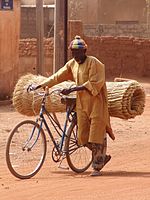
The phrase "appropriate technology" is sometimes associated with E.F. Schumacher, author of Small is Beautiful, though his term was "intermediate technology". The impetus for the idea seems to have come from Gandhi's advocacy of sewing machines, spinning wheels and bicycles - relatively simple technologies that nevertheless can make a huge difference to productivity at the local level, empowering the poor, and requiring fewer resources to produce and maintain. Recently there has been a lot of talk about "sand dams", as one example. The decentralised storage of water is an important strategy in semi-arid and arid regions outside the reach of perennial rivers, springs, deep groundwater or other water sources. Building small concrete dams backfilled with sand in seasonal rivers is an ancient method of storing water that is now being used extensively in Kenya and elsewhere to support local farming communities. As water becomes an increasingly scarce resource in many parts of the world, this relatively cheap solution is becoming more important.

The Pope writes about this in Caritas in Veritate (n.27):
Hunger is not so much dependent on lack of material things as on shortage of social resources, the most important of which are institutional. What is missing, in other words, is a network of economic institutions capable of guaranteeing regular access to sufficient food and water for nutritional needs, and also capable of addressing the primary needs and necessities ensuing from genuine food crises, whether due to natural causes or political irresponsibility, nationally and internationally. The problem of food insecurity needs to be addressed within a long-term perspective, eliminating the structural causes that give rise to it and promoting the agricultural development of poorer countries. This can be done by investing in rural infrastructures, irrigation systems, transport, organization of markets, and in the development and dissemination of agricultural technology that can make the best use of the human, natural and socio-economic resources that are more readily available at the local level, while guaranteeing their sustainability over the long term as well. All this needs to be accomplished with the involvement of local communities in choices and decisions that affect the use of agricultural land. In this perspective, it could be useful to consider the new possibilities that are opening up through proper use of traditional as well as innovative farming techniques, always assuming that these have been judged, after sufficient testing, to be appropriate, respectful of the environment and attentive to the needs of the most deprived peoples.
Readers may be interested in a rural education project in Sierra Leone, started by a former student of Plater College, John Kanu, under the name Sierra Leone Chesterton Centre.

Sunday, 8 November 2009

Community-owned shops


The encyclical letter, Caritas in Veritate, encouraged cooperatives and other applications of solidarity within the economy (e.g. section 66). In Britain, the recession seems to have led to just such a development. The Plunkett Foundation, a charity which promotes self-help in rural communities, reports that 2009 saw an unprecedented number of community-run ventures being set up. So far this year, 25 shops have opened and there are a further 65 in the pipeline, which would take the total number to at least 285, stretching from Cornwall to the Isle of Skye. "We think we've reached a tipping point where we have now gone from a few communities doing something that others saw as unusual to a situation where people are now thinking they could do it too. It is seen as a credible, viable option. It is incredibly rare for the shops to fail, closure rates are virtually zero." While the catalyst for action is often the impending closure of a shop, villages which have not had one for more than 20 years are also joining in the burgeoning movement.

Read the article by Ian Johnston.

The Plural Society


The Catholic Patriarch of Venice, Angelo Scola, is a man of enormous energy and vision. His intense interest in education and the Church’s engagement with the modern world have given rise to a number of important initiatives over the last five years, not least the journal Oasis, published twice yearly in several languages including English and Arabic and aimed primarily at Christians in Islamic countries. Oasis is a lavish production, as yet without a distributor in the UK, containing articles and book reviews as well as important extracts from classic works by the likes of Guardini and Ratzinger. The intention behind Oasis is to foster improved understanding between Christians and Muslims.

A extension of this initiative was launched in September under the name ASSET (for “Advanced Studies Society Economy Theology”). ASSET is a research centre devoted to the interdisciplinary and international study of “the plural society” – by which is meant the postmodern collision or, better, hybridization, of multiple cultural influences. Secular liberalism pretends to value freedom whilst excluding religious hypotheses, in order to ensure that faith can only enter the debate under terms already defined by its opponents. If ASSET is to be successful, it must find a way to reintroduce both theology and the social doctrine of the Church into the public debate.

Information about ASSET and copies of Oasis will be available on the Second Spring stand at the TOWARDS ADVENT Catholic cultural festival in London on 14 November.

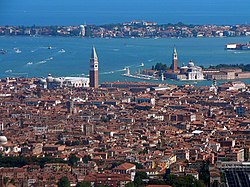
Picture of Venice by Oliver-Bonjoch (Wikipedia)

Wednesday, 4 November 2009

Transhumanism


“We have the technology” – a stock phrase from the old sci-fi show Bionic Man that might serve as the headline for this reflection. But if a thing can be done, should it be done? If there is money to be made, it most certainly will. There is a growing “transhumanist” movement – described by Peter Snow in a recent issue of Oxford Today – that indicates the shape of things to come. The radical enhancement of human beings through technology has already begun. Athletes often resort to treatments to enhance their physical performance. Now we are developing techniques to alter moods, eliminate depression, enhance memory and cognition, and extend life expectancy to two or three hundred years. The genetic engineering of human beings for specific professions and tasks is also becoming possible. Direct interface between brain and computer – and the worldwide web – is on the cards. You may not need your laptop for much longer. The more extreme transhumanists predict and advocate the replacement of the human species by other, superior forms of life developed artificially to improve on the slow efforts of Mother Nature. (See my earlier blog “The Rise of the Machines”.) But such developments will almost certainly create new forms of “wealth” and “poverty”, or reinforce the existing divide. It is only the rich who will be able to give themselves these advantages – if that is what they are.

To my mind, the deeper question raised by all this is not so much the social effects of transhumanism (which will, of course, be disastrous), but what it reveals about the spirit and philosophy of the age. Believing that natural forms are randomly generated by the algorithms of evolution, people have no intellectual defence against these ideas. They are unable to discern any spiritual message in the material world, any divine wisdom in the realm of nature. The ink on the pages of the world has become invisible, leaving them free to scribble whatever they like. Where do we draw the line between legitimate medical treatment and the creation of monsters, if for us the natural forms do not represent some kind of meaningful norm? There is no solution to all this in legislation.

Sunday, 20 September 2009

The Economy of Communion


The following notes are borrowed from an article in the Houston Catholic Worker. Follow the link for the full article and for other online resources about social justice. - S.C.

In his new encyclical, Caritas in Veritate (Charity in Truth) , Pope Benedict pointed to the Economy of Communion as a promising economic model.

The Economy of Communion in Freedom, as it is officially called, is a network of businesses linked to the Focolare Movement.

The Economy of Communion was launched in 1991 when Focolare founder Chiara Lubich visited Focolare communities in Brazil. During that visit Chiara was disturbed to find a whole ring of shanty towns in a circle surrounding the city, the favelas where people lived in abject poverty, "a crown of thorns" around the city. Those involved with the Focolare in Brazil included not only professionals and the middle class but many of these poor.

After that visit, in order to help meet the material needs of the local community, Chiara Lubich proposed a new economic model where for-profit businesses could generate additional jobs and voluntarily share profits in three parts: 1) for direct aid to those in need, 2) for educational programs that foster "a culture of giving" and 3) for continued business development.

EoC businesses commit themselves to building sound relationships with employees, customers, regulatory agencies, the general public and the environment. These new relationships include those who receive aid, who are truly active participants in the project. Sharing one's needs with dignity and sincerity is appreciated as a contribution to increase the life of communion, and many renounce the help just as soon as they reach a bare minimum of economic independence.

The Focolare movement has millions of members throughout the world. The EoC has brought together 754 companies worldwide that are committed to pursuing higher goals than just profit.

For more on the Economy of Communion, see the offical EoC site, which is also permanently listed on the Second Spring "Economy" site under Alternative Economic Paradigms.